AI won’t replace us — it challenges us: insights from SITE Global Conference in Abu Dhabi
Five Takeaways from James Taylor’s Keynote
By the time I walked into James Taylor’s keynote at SITE Global Conference in Abu Dhabi, I thought I knew what was coming, another update on AI tools and a warning that everything is changing. What I heard was more useful than that. It was a practical argument for why creativity, curiosity, and collaboration are becoming business critical, especially for those designing incentive travel experiences.
He began with a vivid story from Colombia about a chef who brought former combatants into a kitchen and taught them to cook. For me, it was a reminder that experiences can be more than entertainment. They can be a framework for rebuilding trust, creating belonging, and helping people see one another differently. That is the emotional territory our industry can occupy when we do it well.
From there, he zoomed out to the pressures shaping the next decade. He described a world moving through three big shifts: a less connected, more multipolar global landscape, the urgent push to decarbonise, and the rapid digitisation driven by AI. His point was not to panic. It was to recognise that these forces are changing expectations, including what travellers value, what organisations prioritise, and how we measure impact.
One moment that stayed with me was a playful demonstration of AI agents, including a simulated phone call to a hotel, which showed how quickly routine interactions can be automated. He also referenced ultra realistic creative machines, like robot artists, as a signal that “creative” is no longer a purely human label. Instead of competing with that, he encouraged us to focus on what humans do best: judgement, empathy, taste, and the ability to connect ideas across contexts.
He distinguished creativity from innovation in a way I will borrow. Creativity generates possibilities. Innovation is what happens when teams test, refine, and implement the best ones. That distinction matters because it shifts the focus from lone genius myths to the systems that help groups produce stronger work. Place matters too, since the environments we choose can either compress thinking or unlock it.
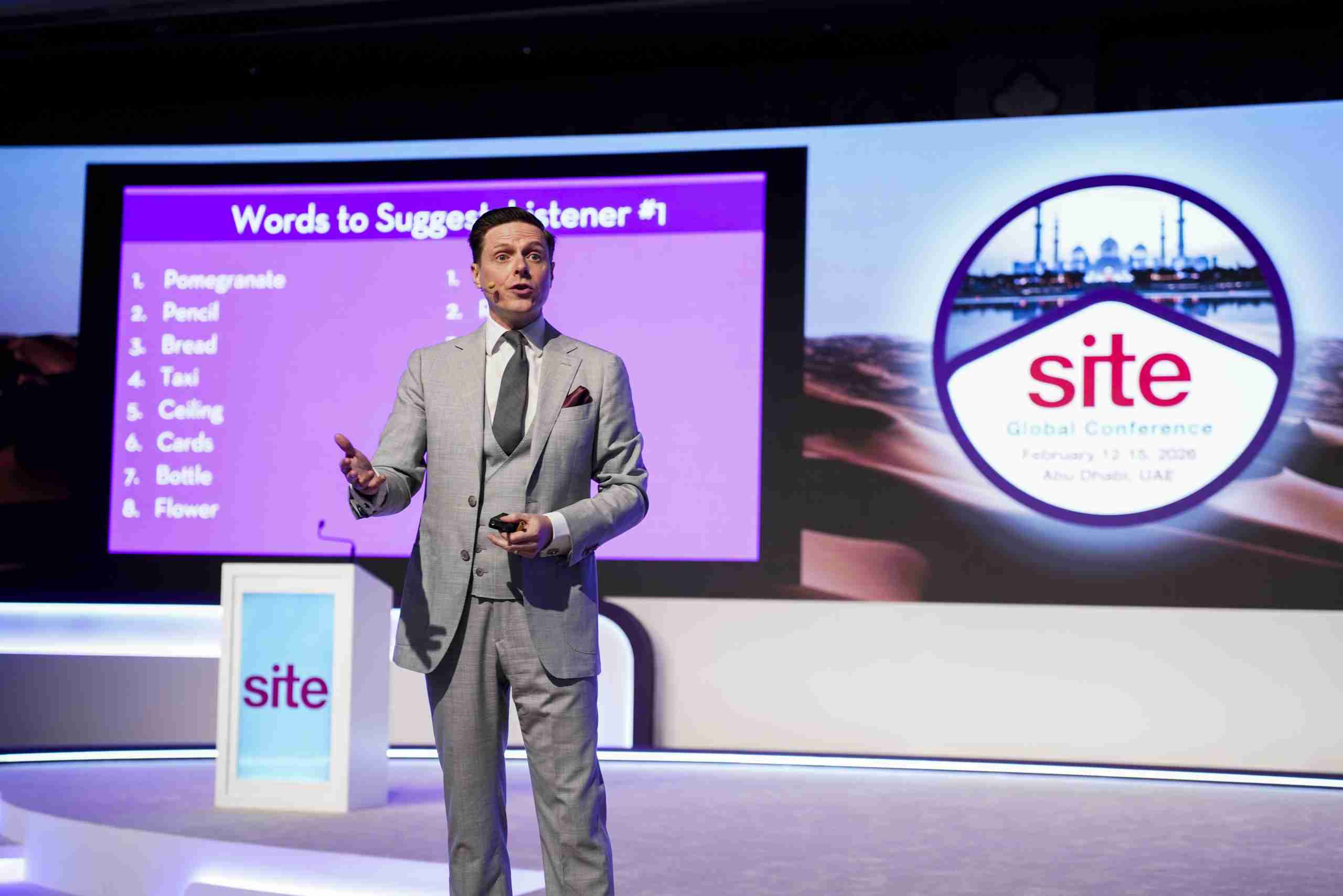
He made this tangible with a simple exercise using random words to jolt people out of predictable patterns. I could feel the room’s energy lift. It reinforced the idea that creativity is a practice, not a personality type.
I left thinking that AI will raise the baseline, but it will not replace the need for human led experience design. If anything, it challenges us to reposition ourselves as experience strategists, people who can translate purpose into programmes that move minds, not just itineraries.
My five key takeaways
- Curiosity is the starting point. Better experiences begin with better questions, not faster answers.
- Creativity and innovation are different. Ideas are the spark, but teams and processes turn them into reality.
- Place is not a backdrop. The environments we choose can either narrow thinking or unlock imagination and connection.
- AI will automate the routine. Our value rises when we use it to expand options, while we bring judgement, empathy, and taste.
- Reposition the role. We are not only planners, we are experience strategists who translate purpose into measurable outcomes.